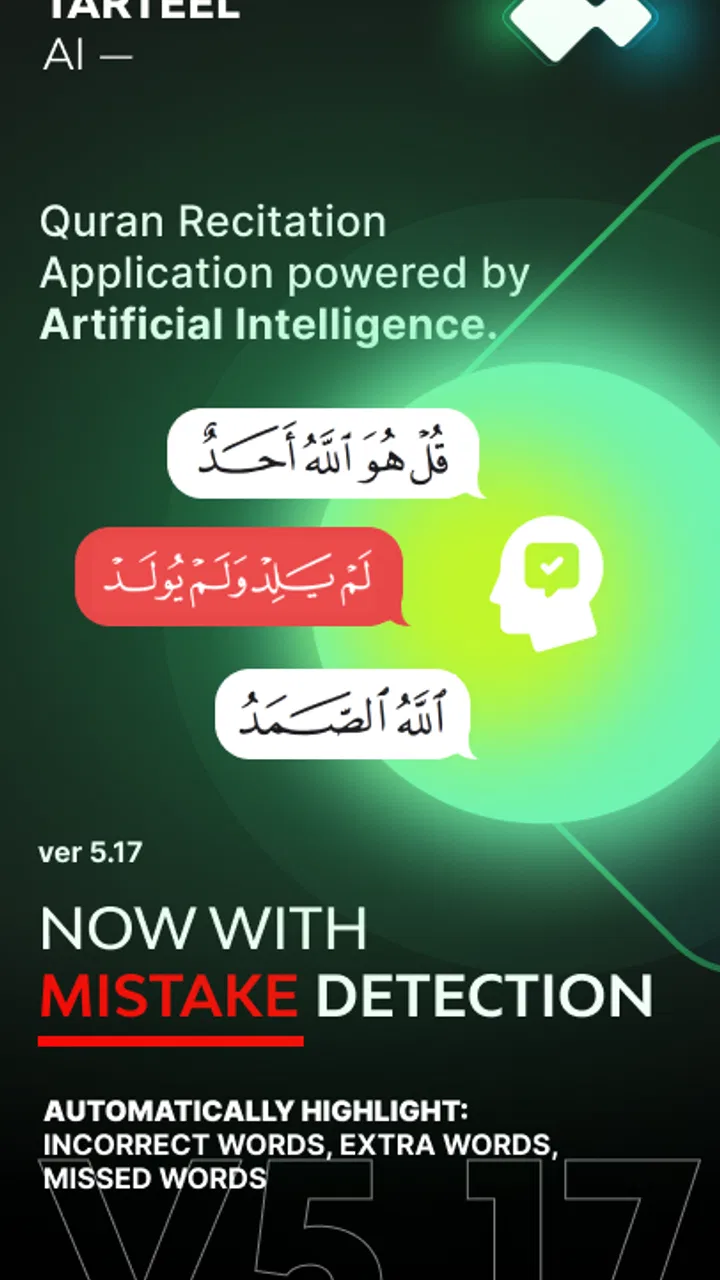
Tarteel: AI Quran Memorization
- 4.6
- Rating
- 10.00M
- Installs
- Free
- Price

 Analysis by App-foxy
I approached Tarteel: AI Quran Memorization as something more demanding than a digital Quran reader. Its real question is whether an app can help me build a repeatable memorization and recitation habit, rather than impress me for a few sessions and then disappear from my home screen. After using it with that standard, I found a focused companion for people who want active practice, especially when they do not have a teacher beside them every time they revise.
The app sits in the Books & Reference category and comes from Tarteel Inc. It is free to start, rated for Everyone, and available for devices running Android 7.0 or later. Its current version is 5.76.1, and the large community around it—over 10 million installs, a 4.7 average from around 103 thousand ratings, and roughly 1.5 thousand written reviews—makes it feel like an established tool rather than an experiment. That popularity is useful context, but it does not answer the more important question: will I still open it after the initial curiosity fades?
What the first week feels like
The first sessions are appealing because Tarteel turns memorization into something I can actively do instead of merely read. I can recite and use the app’s real-time feedback as a check on whether I am keeping up with the passage. That changes the mood of practice. A conventional Quran app is often excellent for reading, listening, bookmarking, or looking up a verse, but it usually leaves the checking work to me. Here, the central activity is recall through my own voice.
You May Also Like

 Blood Strike: 2.5 Anniversary
Blood Strike’s Loadouts Turn Every Drop Into a Tactical Gamble
A close look at Blood Strike’s custom loadouts: how fast access to signature weapons reshapes its battle royale rhythm, rewards preparation, and narrows the gap between fights.

 Pandora - Music & Podcasts
Pandora’s Music Is Easy to Start, but Harder to Recover
Pandora’s strength is its low-effort path from a seed to a station. Its weak spot is how much confidence it asks you to place in connection, setup, and quiet recovery.

 8 Ball Pool
 Is Built on Rivalries, Rematches, and Routine
A close look at the rivalries, rematches, shared routines, and unanswered safety questions that turn a quick pool match into a persistent mobile community.

 Samsung Music
’s Quiet Strength Is Playing What You Already Own
Its reach comes less from spectacle than from dependable access to a personal library. That simplicity is both the app’s strongest retention engine and its ceiling.

 AccuWeather: Weather Radar
AccuWeather Review: A Quick, Clear Forecast for Everyday Decisions
For everyday plans, the best forecast is the one you can understand quickly. AccuWeather makes rain timing, radar, and local conditions easy to act on, with a few trade-offs.

 Hill Climb Racing
Why Hill Climb Racing Still Turns Crashes Into One More Run
A tiny car, a bumpy hill and one more upgrade: Hill Climb Racing keeps resurfacing because its simple chaos makes every near-miss feel personal.
More From Our News Desk
View All News


That distinction matters for beginners and for people returning to memorization after a long break. During a short session, I can choose a manageable portion, attempt it without constantly looking down, and notice where my confidence drops. The app is most useful when I treat it as a practice partner, not as an authority replacing a qualified teacher. It can make revision more convenient, but it does not remove the need for careful learning and correction.
My strongest first-week use case would be a quiet ten-minute session after one of the daily prayers. I would open the passage I am working on, place the phone where I can speak naturally, and recite from memory instead of reading every line. If I stumble, the feedback gives me a reason to pause and repeat that section. This is more purposeful than casually playing a recitation in the background, because I have to retrieve the words myself.
The voice-based approach also makes the app feel personal. I am not simply tapping through a checklist. I have to participate, and that participation exposes weak spots quickly. Someone who tends to overestimate how well they know a surah may find this especially valuable. Silent recognition can feel like memorization, while spoken recall reveals whether the words are actually available without visual support.
There is a practical setup issue, though. A voice-focused tool needs a setting where I can speak comfortably. A crowded room, a noisy commute, or a shared office is not ideal. Even when the app is technically available, I may not want to recite aloud. That means its usefulness depends partly on my environment, unlike a standard reading app that works discreetly almost anywhere.
The first week can also create a misleading sense of progress. Real-time feedback feels immediate, and immediate feedback is satisfying. But memorization is not proven by one successful attempt. I need to return later, begin from different points, and test passages when the words are less fresh. Tarteel can support that discipline, but I still have to supply the discipline.
How I would use it for a realistic daily routine
For a busy student or worker, I would divide practice into three small stages rather than attempt one ambitious session. First, I would review a previously memorized passage. Next, I would recite it aloud with the screen offering only the help I actually need. Finally, I would repeat the weakest portion once more before closing the app. This workflow keeps the tool connected to maintenance instead of turning every session into a race to add new material.
A parent could use the same approach with a child, but with supervision and a human conversation around the feedback. The app may make repetition less frustrating, yet a child still benefits from encouragement and explanation that software cannot provide in the same way. For an adult studying alone, the benefit is independence: I do not need to wait until a teacher, friend, or family member is available before attempting a revision check.
I would also avoid practicing only from the beginning of a passage. Starting at random points is a simple but important habit because it tests whether I know the structure rather than merely remembering the sequence. Tarteel becomes more useful when I deliberately vary my starting point and revisit sections that felt easy yesterday. That is one of the ways to turn an impressive first week into a meaningful month.
Why the value can continue after the novelty
The lasting value comes from repetition. A memorization app does not need to entertain me every day; it needs to lower the friction between deciding to revise and actually revising. Tarteel’s active recitation model gives each session a clear purpose. I am not opening it just to browse. I am opening it to test recall, identify mistakes, and continue a practice cycle.
That makes it different from the usual alternatives in this category. A printed Quran offers a calm, distraction-free reading experience and remains preferable for people who want no device involved. A general Quran app may be better for translations, tafsir, audio playback, or broad reading features. A teacher or study circle provides context, encouragement, and nuanced correction that no automated system can fully reproduce. Tarteel’s narrower strength is the gap between those options: private, repeatable recitation practice when I need more than reading but less scheduling than a formal lesson.
The app is particularly well suited to someone who already knows the basics of recitation and wants a regular self-check. It can also help a learner establish a habit by making practice measurable in a personal sense: I hear where I hesitate, then decide what to repeat. I would not choose it as my only resource for learning correct pronunciation from the beginning, but I would consider it a useful companion once instruction and foundational guidance are in place.
Its recurring value depends on whether I use feedback intelligently. If I simply repeat a passage until the app accepts it, I may optimize for a single successful attempt rather than durable memory. A better approach is to stop after a reasonable correction, close the app, and return later. The uncomfortable gap between sessions is where I learn whether the memorization is holding.
Another useful habit is to keep old material in rotation even when new material feels more exciting. New memorization gives quick satisfaction, while maintenance can feel repetitive. Tarteel is more valuable when I use it to protect earlier work from fading. I would reserve part of each week for passages I have not practiced recently, then use the feedback to decide which ones need attention rather than relying on confidence alone.
For users who already have a teacher, the app does not have to compete with that relationship. I can use it between lessons to prepare, revise, and arrive with specific questions. Instead of saying that a passage feels difficult, I can identify the exact places where my recitation repeatedly breaks down. That makes limited teacher time more focused, although the app should remain a supplement rather than the final judge of every issue.
The maintenance burden behind the simple idea
The basic concept is easy to understand, but maintaining a useful routine requires more than installing the app. I need a quiet enough place, a willingness to recite aloud, and a realistic plan for what to practice. If I open it without deciding whether I am reviewing, testing, or learning, the session can become unfocused. The software reduces some friction, but it cannot schedule my priorities for me in a meaningful way.
There is also a mental burden that comes with constant correction. Feedback is helpful when I am ready to learn, but tiring when I am already rushed or discouraged. A session that repeatedly highlights mistakes can feel heavier than a quiet reading session. I would keep practice short on difficult days rather than abandon the habit entirely. A few careful repetitions are more sustainable than forcing a long session and associating the app with frustration.
People should also think about privacy and comfort in practical terms before making it a daily tool. Since the central interaction involves speaking, I would choose a location where I am comfortable using my voice and avoid treating it as a background activity. I would not expect the same experience on every device or in every room, because microphones, noise, and my own speaking volume can influence how smooth the interaction feels.
The free starting price lowers the barrier to trying it, which is important for a habit-building app. At the same time, in-app purchases range from $12.99 to $249.99 per item, so I would inspect the purchase screen carefully before committing to anything. The presence of optional spending does not automatically weaken the free experience, but it does mean I would decide based on actual long-term use rather than enthusiasm during the first week.
That decision is easier if I first establish a routine with the available core experience. I would not pay simply because the app has an attractive promise. I would use it long enough to learn whether its feedback fits my recitation style, whether I can practice consistently, and whether it genuinely helps me return to older passages. If those answers are positive, a purchase may feel considered; if not, spending more will not solve a habit problem.
Where fatigue begins
The biggest source of fatigue is repetition without visible variety. Memorization naturally involves repeating the same material, and an app cannot make every repetition feel fresh. Tarteel can make the work more interactive, but I may still tire of hearing myself correct the same passage. This is not a flaw unique to the software; it is a reminder that the tool supports a demanding practice rather than replacing it with entertainment.
Another potential strain is becoming too dependent on immediate feedback. If I always recite with the app ready to signal an error, I may feel less confident reciting without it. I would deliberately schedule some sessions with the phone set aside, using Tarteel only afterward to check the areas I was unsure about. That balance protects independence and keeps the app in its proper role.
There is also a risk of confusing technical success with spiritual or educational progress. A clean session can be encouraging, but memorization has depth beyond getting through a passage once. Understanding, consistency, correct instruction, and sincere intention remain outside the narrow measurement of an automated practice tool. I appreciate Tarteel most when I use it as one part of a broader routine rather than as a scorecard for my entire relationship with the Quran.
For someone who mainly wants translations, commentary, or a beautiful reading interface, this may feel too specialized. The app’s voice-centered purpose will not be a benefit if I rarely intend to memorize or recite aloud. In that situation, a traditional reading app or a physical Quran would likely be a better fit. Likewise, a learner who needs detailed human correction should prioritize a teacher and use this app only between lessons.
Does it earn a permanent place?
In my view, Tarteel earns lasting space when I give it a defined job: checking spoken recall and keeping memorization active between human or personal study sessions. It is not merely a digital shelf for Quranic text, and it is not a replacement for instruction. Its strongest contribution is accountability at the moment I recite. That is a valuable role because it turns an intention into an action I can repeat.
The app is a good recommendation for an independent learner, a busy adult trying to preserve a daily habit, or anyone who wants a private way to test memorization. I would also recommend it to a person who reads confidently but wants to discover whether that confidence survives without looking at the page. The free entry point makes experimentation straightforward, while the Everyone rating makes it suitable for a broad audience, provided younger users receive appropriate guidance around study and device use.
I would hesitate to recommend it as the sole solution for a complete beginner, someone seeking deep explanation, or a person who cannot comfortably recite aloud where they live or work. In those cases, a teacher, study group, printed text, or a broader Quran reference app may serve the main need better. Tarteel becomes strongest when it fills a specific gap instead of being asked to do everything.
My practical advice is to begin with a small maintenance plan: one familiar passage, one short spoken check, and one deliberate return later in the week. Track the places that repeatedly cause hesitation, not just the sessions that go well. Use the app when its feedback can guide a decision, then step away from it when silent review, human teaching, or reflection is more appropriate.
After the novelty fades, that is what remains: not the excitement of an AI feature, but the usefulness of a repeatable checkpoint. The lasting value is in making revision easier to begin and harder to fake. If that matches what I need, Tarteel is a thoughtful and practical companion. If I only want to read, listen, or study explanations, I would choose a different kind of Quran app and avoid forcing this one into a role it was not designed to fill.
FAQs for Tarteel: AI Quran Memorization
01What is Tarteel and how does it help with Quran memorization?
Tarteel is an AI-driven application designed to aid users in memorizing the Quran. It uses advanced speech recognition technology to listen to your recitations, providing instant feedback on accuracy. The app helps users identify mistakes in pronunciation and memorization, making it a valuable tool for both beginners and advanced learners.
02Is Tarteel suitable for all ages and proficiency levels?
Yes, Tarteel is designed to cater to users of all ages and proficiency levels. Whether you are a child just starting to learn or an adult seeking to refine your memorization skills, the app offers customizable features to match your specific needs, ensuring a supportive learning environment for everyone.
03Does Tarteel require an internet connection to function?
Tarteel primarily functions online as it utilizes cloud-based AI technology for speech recognition. While some features may be accessible offline, an internet connection ensures optimal performance and access to the app’s full range of capabilities, including real-time feedback and updates.
04Are there any subscription fees or in-app purchases in Tarteel?
Tarteel offers both free and premium versions. The free version provides basic features, while the premium subscription unlocks advanced functionalities like detailed feedback, personalized learning plans, and ad-free experience. Users can choose based on their requirements and budget, making it flexible for diverse needs.
05How does Tarteel ensure the privacy and security of user data?
Tarteel is committed to maintaining user privacy and security. The app employs robust encryption protocols to protect personal data and recitations. Additionally, it adheres to strict privacy policies, ensuring that user information is not shared with third parties without consent, providing peace of mind to its users.
Pros
- Accurate voice recognition for recitation.
- Interactive interface enhances learning.
- Supports multiple languages efficiently.
- Offline mode for convenient access.
- Tracks progress for personalized feedback.
Cons
- Limited features in the free version.
- Occasional bugs in audio playback.
- Requires stable internet for updates.
- No integration with other Quran apps.
- Lacks advanced customization options.

Tarteel: AI Quran Memorization
Gallery